Preparing a bid takes days of work. Answering a poorly targeted tender means less time for the ones you can win. An explicit go/no-go decision, taken early, protects your team.
Five questions to ask
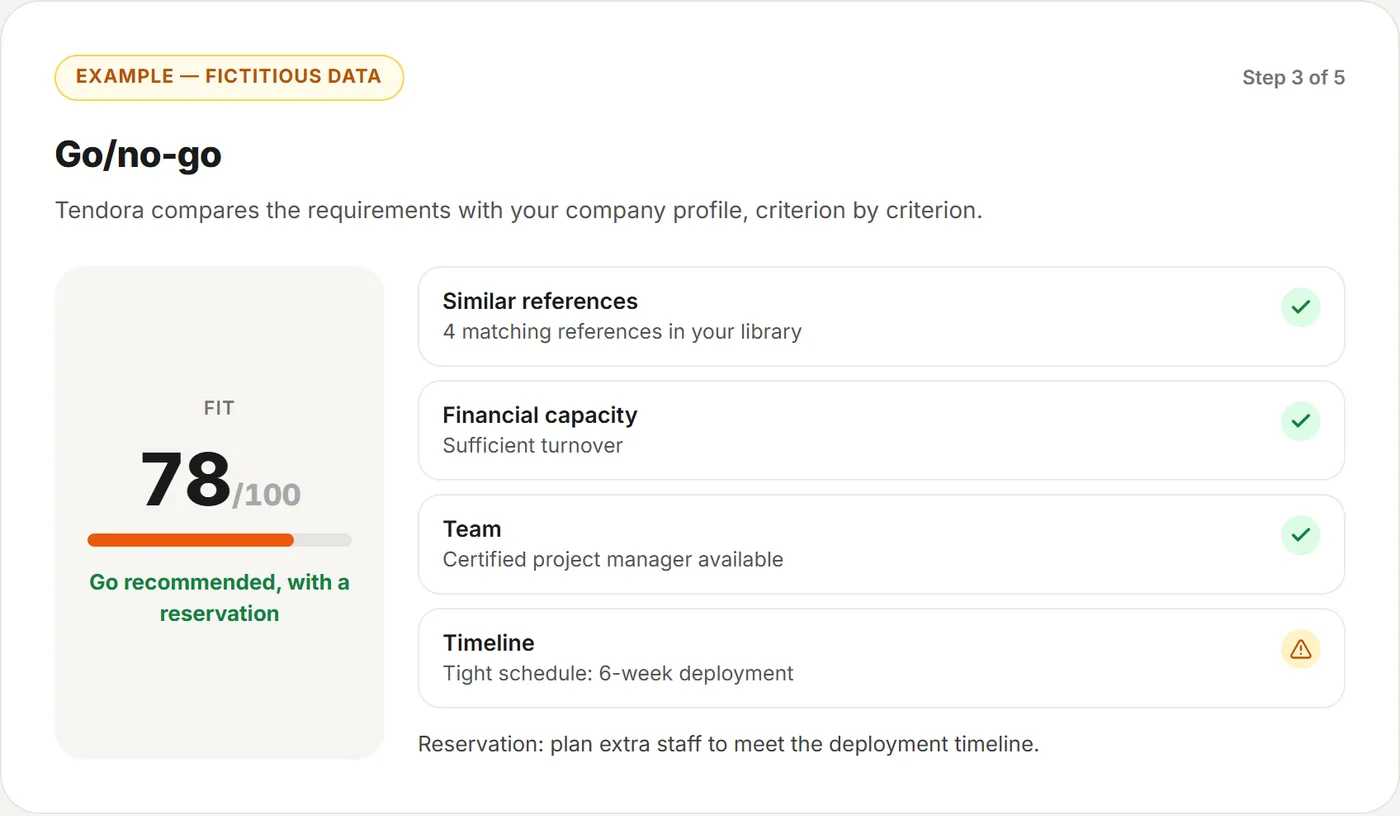
- Fit: can we do exactly what is requested, with comparable references?
- Admissibility: do we meet all conditions (qualification, turnover, documents)?
- Capacity: is the team available to prepare the bid and then deliver on time?
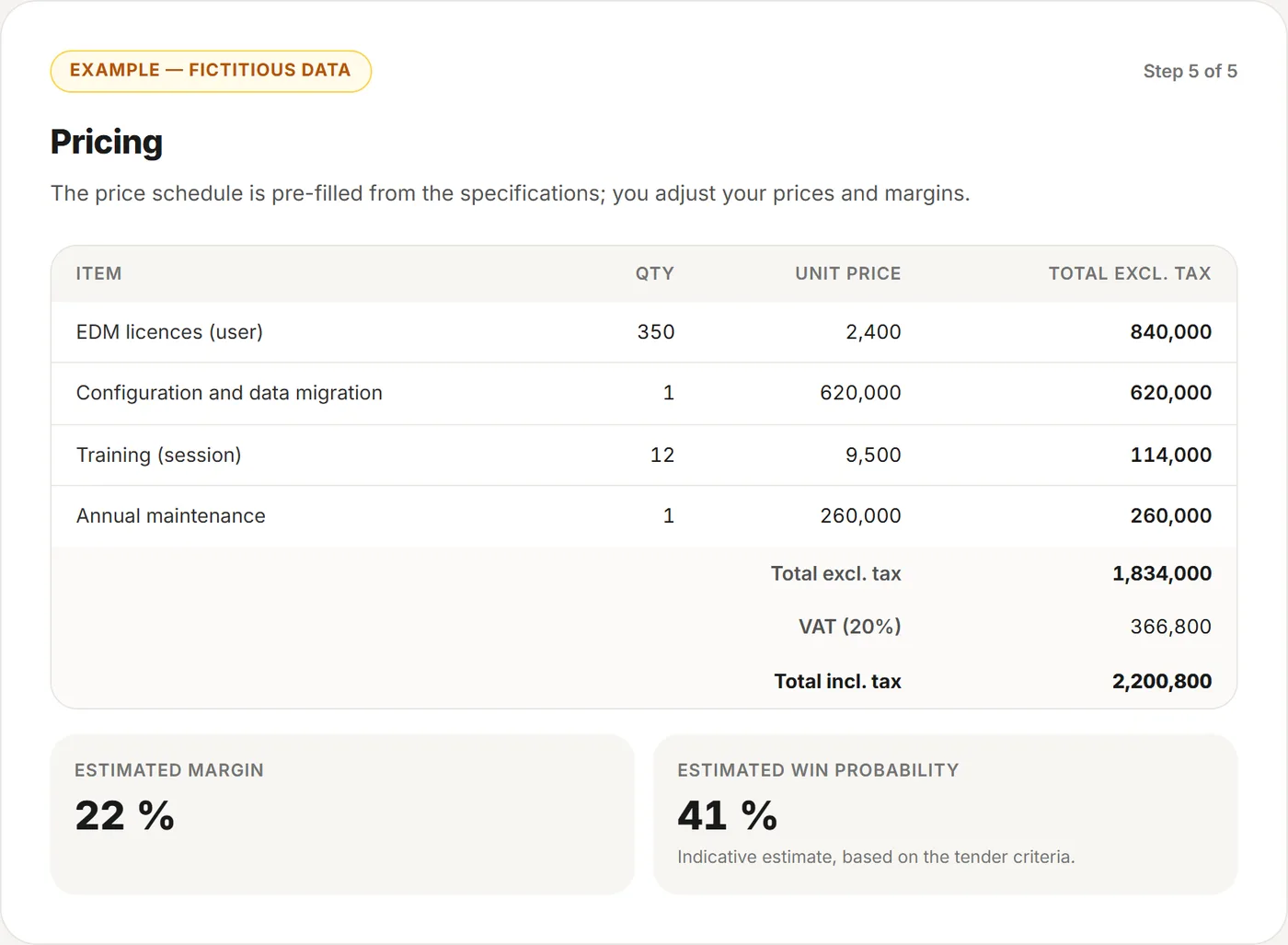
- Profitability: does the likely price cover our costs, guarantees and risks (penalties, payment terms)?
- Chances: do we know the buyer and the competition, and do we have a real advantage?
Score, then decide
Score each question and note the reservations: a "go with reservations" can be the right answer, provided the reservation is lifted (partner, extra staff, question to the buyer).
Decide early and together
The decision is best taken right after reading the documents, with sales management and the person who will run delivery. Keep a record of the decision and its reasons: it will help refine your criteria.
In Tendora, the AI analysis suggests a go/no-go opinion criterion by criterion based on the documents and your profile; it remains an opinion, your team decides.
This guide is general: the applicable rules are those of the country, the funder and the tender documents.
← All guides